

For millions of diabetics, continuous glucose monitors are not a convenience; they are a lifeline. These devices are trusted to deliver accurate, real-time glucose data so patients can make critical decisions about insulin dosing and treatment. When that data is wrong, the consequences can be devastating.
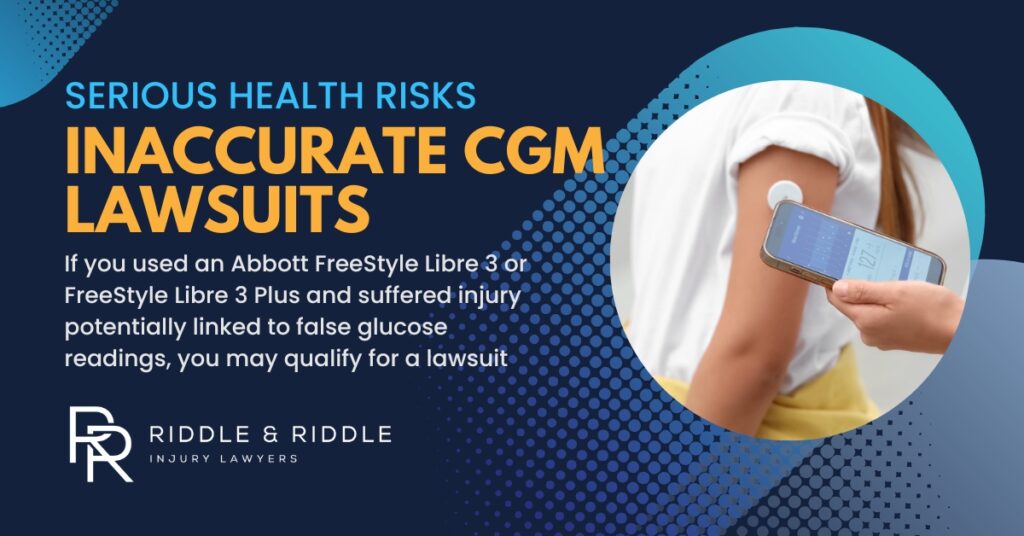
Lawsuits involving Abbott’s FreeStyle Libre 3 and FreeStyle Libre 3 Plus continuous glucose monitoring systems allege that defective sensors produced dangerously inaccurate glucose readings, leading to severe injuries and, in some cases, death. If you or someone you love has suffered injury after relying on one of these devices, Riddle & Riddle Injury Lawyers is here to help with your potential FreeStyle Libre lawsuit. Call 1-800-525-7111 for a FREE case review.
We are actively investigating these claims and would love to help however we can. There are no upfront costs, and we don’t get paid unless you do. Call 1-800-525-7111 and let us review your claim.
IMPORTANT: Abbott strongly denies any liability and/or wrongdoing in these cases. There are no guarantees that this litigation will resolve favorably for plaintiffs and the outcome of any case depends on its unique facts and circumstances.
Understanding the FreeStyle Libre 3 and Libre 3 Plus
The FreeStyle Libre 3 and FreeStyle Libre 3 Plus are wearable CGM (Continuous Glucose Monitor) systems designed to track glucose levels continuously throughout the day and night. A small sensor is worn on the body and sends glucose readings directly to a smartphone app, allowing diabetics to monitor trends and respond quickly to changes.
For insulin-dependent diabetics, accuracy is essential. Patients rely on CGM data to determine how much insulin to take, when to eat, and when to seek medical care. Even a short period of incorrect readings can result in dangerous blood sugar swings that escalate rapidly.
According to publicly available information, Abbott estimates that up to three million sensors may be affected by the issues at the center of current litigation. While not a formal “recall,” Abbott has issued a “voluntary correction” advising consumers to stop using and discard impacted devices.
Is Your Continuous Glucose Monitoring (CGM) System Affected?
Certain FreeStyle Libre 3 and FreeStyle Libre 3 Plus CGMs may be affected and included in Abbott’s voluntary correction. Abbott encourages consumers to visit FreeStyleCheck.com to determine if their device is impacted. If your device is included in the voluntary correction, stop using it immediately. According to its voluntary correction notice, Abbott will replace any affected device at no cost.
Do I Qualify for a FreeStyle Libre 3 Lawsuit?
You or a loved one may qualify for a FreeStyle Libre 3 Lawsuit if you meet the following criteria:
- Used a FreeStyle Libre 3 or FreeStyle Libre 3 Plus continuous glucose monitoring (CGM) system affected by Abbott’s voluntary correction
- Suffered from any of the following injuries potentially caused by false glucose readings:
- Diabetic ketoacidosis
- Severe hypoglycemia or hyperglycemia
- Seizures
- Loss of consciousness or coma
- Central nervous system dysfunction
- Permanent neurological damage
- Death
What Went Wrong With the FreeStyle Libre Sensors?
The lawsuits allege that certain continuous glucose monitoring systems, FreeStyle Libre 3 and FreeStyle Libre 3 Plus, sensors were defectively designed or manufactured, resulting in false glucose readings. These errors allegedly included both falsely high and falsely low glucose values.
In July 2024, Abbott issued a voluntary correction after discovering that some sensors were producing falsely elevated glucose readings. In November 2025, the company acknowledged that the same devices could also generate falsely low readings. Either error can place a patient in immediate danger.
Falsely high readings may prompt a patient to administer too much insulin, potentially causing blood sugar to crash to life-threatening levels. Falsely low readings may cause patients to delay insulin or other treatment, allowing glucose levels to rise unchecked. In both scenarios, patients may not realize the data is inaccurate until severe symptoms or medical emergencies occur.
Why Inaccurate Glucose Readings Are So Dangerous
Diabetes management depends on keeping glucose levels within a narrow, safe range. Continuous glucose monitors are meant to reduce risk and improve safety. When a CGM provides faulty data, that safety net disappears.
Out-of-control glucose levels can cause immediate warning signs such as increased thirst and urination, blurred vision, fatigue, fruity-smelling breath, rapid heartbeat, and deep, labored breathing. These symptoms can worsen quickly, especially when insulin decisions are based on inaccurate readings.
In severe cases, faulty glucose data can trigger diabetic ketoacidosis, a life-threatening condition that requires emergency medical treatment. DKA can develop rapidly and may lead to organ failure, permanent neurological damage, or death if not treated promptly.
Reported Injuries and Deaths Linked to FreeStyle Libre Sensors
As of November 2025, Abbott has reported at least 736 serious injuries and seven deaths associated with FreeStyle Libre 3 sensors. These numbers may underrepresent the true scope of harm, as adverse events involving medical devices are often underreported.
Alleged injuries in FreeStyle Libre lawsuits include:
- Diabetic ketoacidosis
- Severe hypoglycemia or hyperglycemia
- Seizures
- Loss of consciousness or coma
- Central nervous system dysfunction
- Permanent neurological damage
- Death
These injuries may be linked to the over-delivery or missed delivery of insulin based on inaccurate glucose readings. For many victims, the harm required emergency hospitalization, intensive care, or resulted in lasting disability.
If you experienced any of these complications after using a FreeStyle Libre 3 or FreeStyle Libre 3 Plus device, call 1-800-525-7111 to learn whether you may qualify for a claim.
How to Check Whether Your FreeStyle Libre Sensor Is Affected
If you use a FreeStyle Libre 3 or FreeStyle Libre 3 Plus CGM, it is important to determine whether your sensor may be among those affected by Abbott’s correction. Not all users received direct notification from the company.
Abbott issued a public announcement on November 24, 2025, explaining how patients can identify potentially defective sensors, including those included in the estimated three million impacted devices. Patients can also verify whether their sensor is affected by visiting FreeStyleCheck.com, where Abbott provides a tool to confirm whether a specific device falls within the scope of the correction.
IMPORTANT FOR POTENTIAL PLAINTIFFS: Although Abbott has advised consumers to discard certain sensors, anyone who suffered an injury should preserve the device if possible. The sensor itself may be critical evidence in a legal claim.
What the FreeStyle Libre Lawsuits Allege
The lawsuits involving FreeStyle Libre sensors allege that Abbott failed to ensure its devices were safe and reliable before distributing them to diabetic patients. Claims may assert that the company knew or should have known about sensor defects and failed to adequately warn patients and healthcare providers.
Common allegations in Abbott FreeStyle Libre lawsuits include:
- Defective design or manufacturing
- Failure to warn about known risks
- Inadequate testing and quality control
- Misrepresentation of device accuracy and safety
These cases seek to hold Abbott accountable for injuries caused by allegedly defective medical devices.
Compensation Available in FreeStyle Libre Claims
Victims of defective glucose monitoring devices may be entitled to compensation for the full extent of their losses. Depending on the circumstances, potential damages may include:
- Emergency and ongoing medical expenses
- Hospitalization and rehabilitation costs
- Lost wages and reduced earning capacity
- Pain and suffering
- Permanent disability or neurological impairment
- Wrongful death damages for surviving family members
Riddle & Riddle Injury Lawyers works to pursue maximum compensation based on the long-term impact these injuries have on victims and their families.
Why Choose Riddle & Riddle for Your Abbott FreeStyle Libre Claim?
When you are facing a powerful medical device manufacturer like Abbott, experience matters. Riddle & Riddle Injury Lawyers has been standing up for injured individuals and families harmed by allegedly dangerous products and allegedly defective medical devices for over 20 years.
Our firm has recovered over $900 million in compensation for clients since 2000 alone (see disclaimer below), and our attorneys bring more than 170 years of combined legal experience to every case. We understand the medical and legal complexity of defective device litigation and the profound toll these injuries can take on everyday lives.
We’re proud to be named a “Best Family-Run Law Firm” in 2025 by NC Lawyers Weekly. Led by father-daughter duo attorney Gene Riddle and attorney Alex Riddle, our firm is humbled by the words our clients use to describe their experience with Riddle & Riddle Injury Lawyers:
- “Every time I’ve needed them, they were there for me.” -Tyronnie T.
- “They fought hard for me. I would recommend them to anyone.” -Christine W.
- “This settlement changed me and my family’s lives.” -Linda B.
Our attorneys are widely recognized for their work and maintain memberships in respected legal organizations and professional associations nationwide (see disclaimer below), including:
- The National Trial Lawyers Top 100
- Multi-Million Dollar Advocates Forum
- National Association of Distinguished Counsel
- AV Preeminent Rating by Martindale-Hubbell
- Super Lawyers
If you or a loved one was harmed after using a FreeStyle Libre 3 or FreeStyle Libre 3 Plus sensor, do not wait to explore your legal options. Call 1-800-525-7111 today for a free, no-obligation case review and learn how Riddle & Riddle Injury Lawyers can help you pursue justice.
When Justice Counts™, count on the defective medical device lawyers at Riddle & Riddle.