

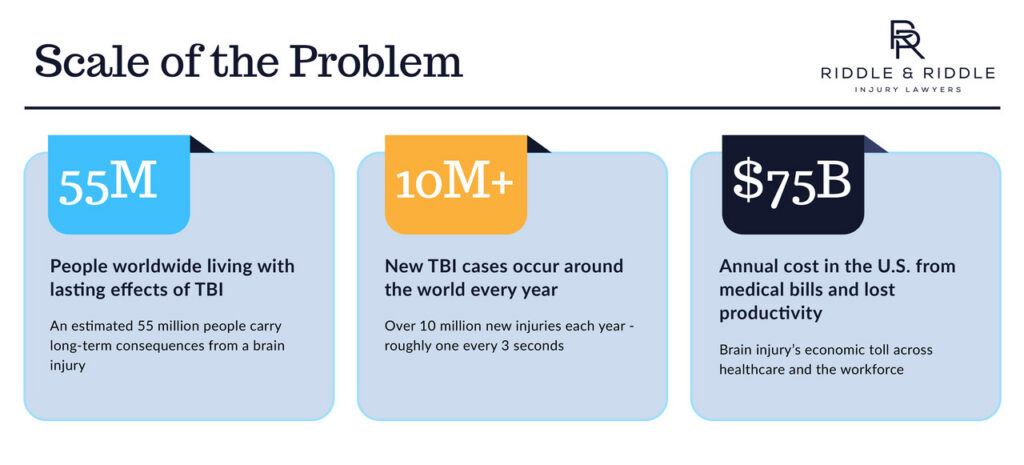
Memory loss following an accident is more than a temporary side effect of shock; it is often the primary clinical indicator of a Traumatic Brain Injury (TBI). Globally, an estimated 55 million people live with the lasting effects of a TBI, with more than 10 million new cases occurring every year. In the United States alone, these injuries contribute to over $75 billion in annual medical costs and lost productivity, underscoring the massive economic and personal scale of the problem.
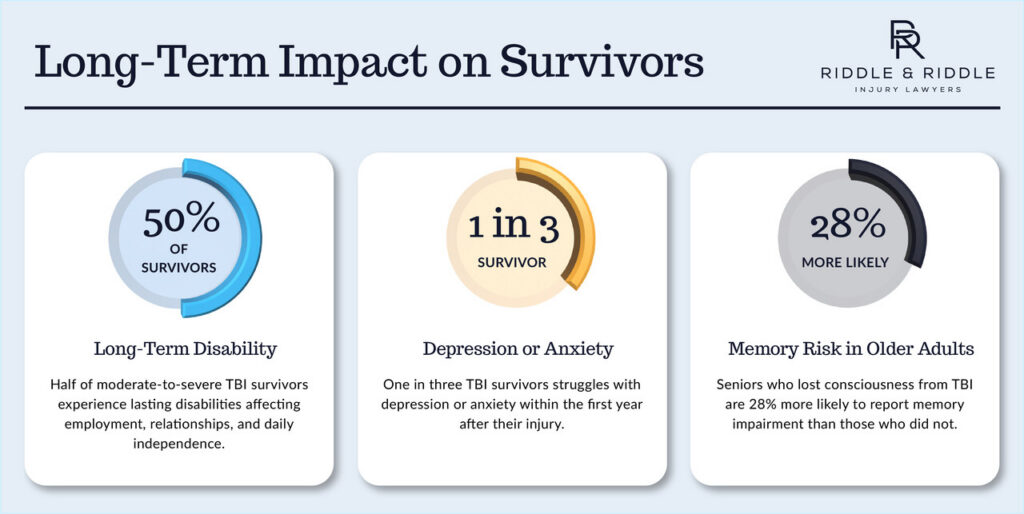
For many, memory loss is not a standalone symptom but a life-altering event. Approximately 50% of survivors of moderate to severe TBI experience long-term disabilities that fundamentally change their employment, relationships, and daily independence. Additionally, the psychological impact is considerable: one in three survivors faces depression or anxiety within the first year following their injury. Whether you are facing gaps in your memory of the event or struggling to process new information, understanding the symptoms and their causes is the first step toward navigating the complexities of recovery and maintaining long-term cognitive health.”
Key Takeaways
- Memory loss after an accident can result from direct head injury, concussion, oxygen deprivation, or psychological trauma.
- People suffering from accident-related memory loss may lose memories from before their injury or be unable to form new memories afterward.
- If someone else’s negligence led to your memory problems, you may be entitled to compensation for your resulting medical expenses, lost income, and other damages.
What Is Memory Loss?
Memory loss is a term describing any issue with creating or storing new memories or recalling existing ones. It occurs when the brain areas responsible for processing and organizing information are disrupted or damaged.
A person with memory loss may have problems with short-term memory, meaning they struggle to keep track of new information and recall it shortly afterward. They may also have challenges with long-term memory, which involves storing and later retrieving past experiences. The type and severity of these difficulties often depend on how and where the brain suffered damage.
Unlike dramatic portrayals in television and movies, most accident-related memory loss does not result in someone forgetting their entire identity. Instead, it commonly affects specific memories or the ability to form new ones.
Short-Term Memory
- Struggles to keep track of any new information and recall it shortly after.
- Limited capacity to retain information
- Used for temporary memory or quick tasks
- Anterograde Amnesia is a type of short-term memory loss
Long-Term Memory
- Storing and later retrieving past experiences.
- Large capacity to retain information
- Used for storing knowledge, experiences, and skills
- Retrograde Amnesia is a type of long-term memory loss
Types of Memory Loss After an Accident
Not all memory loss looks the same. Medical professionals often group accident-related memory problems into three main categories, each with distinct characteristics.
Anterograde Amnesia
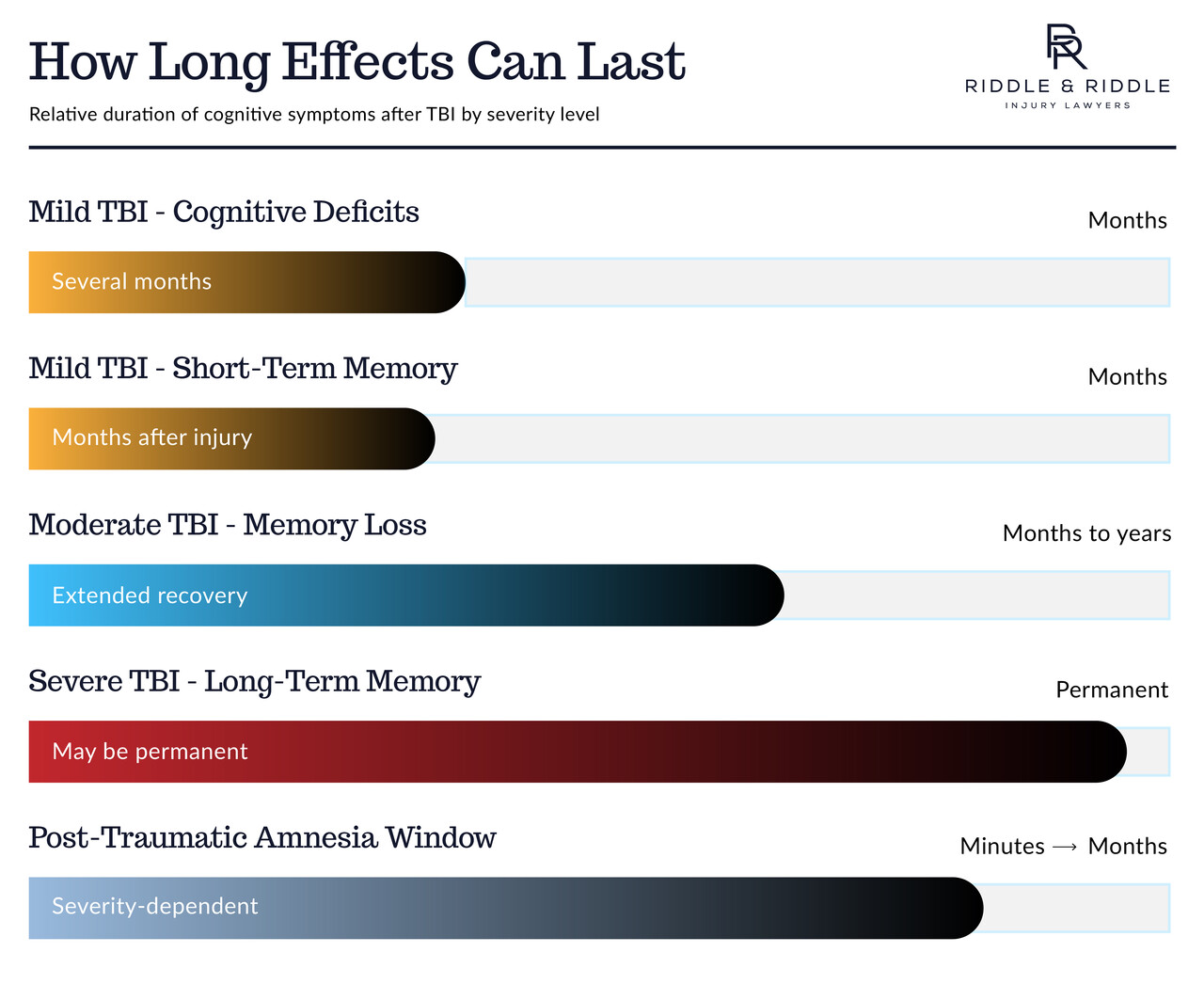
Anterograde amnesia occurs when a person cannot form new memories after an injury. While memories from before the accident typically remain intact, recent information may fade within seconds or minutes.
This type of memory loss primarily affects explicit memory, which involves facts and personal experiences. A person with anterograde amnesia may forget discussions shortly after they happen, repeat the same questions, fail to recognize people they just met, or be confused about the date or time.
The condition can also create serious risks in daily life. For example, someone may forget that they already took their medication and take another dose, start cooking and forget that they have food on the stove, or forget safety instructions from their employer.
Retrograde Amnesia
Retrograde amnesia occurs when a person has difficulty retrieving memories that formed before the injury occurred. It most often affects more recent pre-accident memories rather than distant ones.
Some people with the condition lose memories from the year before the accident, while others may lose decades of memories. The consequences can be tragic in many cases, with patients suffering disruptions in relationships, employment, and identity.
For example, a parent may remember their 10-year-old child’s early years but not recognize their 3-year-old child. A young professional may forget the skills they’ve learned in their new career but recall vivid details from childhood.
Post-Traumatic Amnesia
Post-traumatic amnesia is a temporary state of memory loss that occurs after a head injury. Someone with this type of memory loss from a car accident may have difficulty remembering events that happened before the crash, trouble forming new memories afterward, or a combination of both.
Symptoms can vary widely. A person may appear disoriented, not recognize familiar people, ask the same questions repeatedly, act agitated, or be unable to process the fact that they’ve suffered an injury. Many people with post-traumatic amnesia after a car accident recover within a few minutes or hours, while others may experience symptoms for days, weeks, or even months.
How an Accident Can Cause Memory Loss
Memory problems can develop after many different types of accidents, not just those involving obvious head injuries. Depending on the circumstances, symptoms may appear immediately or not become noticeable until days after the incident.
Direct Head Injury
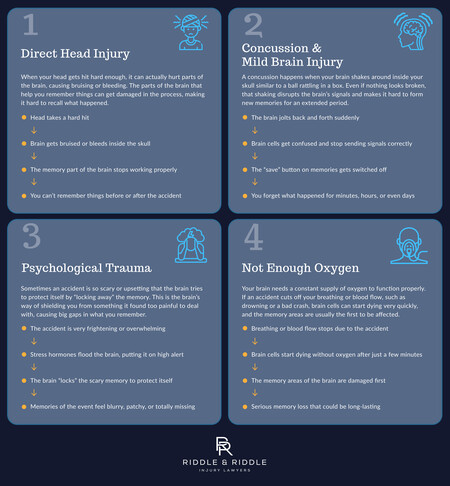
A direct blow to the head can disrupt the areas of the brain responsible for forming and recalling memories. This type of injury occurs when the head is struck by an object or when an object penetrates the skull, causing physical damage to brain tissue. For instance, a driver may violently strike their head on a steering wheel during a car crash and suffer a brain contusion, or a construction worker may be hit by falling debris that fractures the skull.
The severity of memory loss from this type of injury depends on the location and extent of the damage. Symptoms of a direct head injury vary widely and may include swelling, bleeding, dizziness, vision changes, loss of consciousness, or seizures.
Concussion and Mild Traumatic Brain Injury (mTBI)
A concussion is a mild traumatic brain injury that occurs when a sudden jolt causes the brain to shift inside the skull. It can happen even without an object striking the head—sudden movement is all it takes to create this type of injury.
Concussion injuries are common in car accidents, especially rear-end collisions that cause the head to undergo a rapid back-and-forth movement without physical trauma. Although the symptoms are often minor, they can still interfere with daily life and may vary depending on the force of impact.
Psychological Trauma
An accident can create severe mental stress or emotional trauma that may interfere with how the brain forms and retrieves memories. The release of stress hormones during a traumatic event may prevent the brain from storing strong memories of the accident. In some cases, the brain may limit access to certain memories as a protective response to overwhelming stress, making it easier to cope with the experience in the short term.
Oxygen Deprivation
Certain accidents can temporarily reduce the brain’s supply of oxygen, such as in cases involving near-drowning, choking, or severe blood loss. Because brain cells rely on oxygen to function properly, even brief interruptions can damage the brain’s memory function. The extent of the resulting memory problems depends on how long the oxygen supply was disrupted and how severely it affected the brain.
Common Symptoms of Memory Loss You May Notice After an Accident

Memory loss doesn’t always present as a dramatic inability to remember major events. In many cases, it appears through subtle difficulties with recall or confusion after a car accident. Common symptoms that may suggest that someone is experiencing accident-related memory problems include:
- Forgetting recent conversations
- Losing track of conversations midway through
- Repeating questions or statements
- Difficulty remembering appointments or commitments
- Trouble learning new information
- Forgetting names or faces easily
- Misplacing items more frequently than usual
- Disorientation about time or place
- Trouble finding the right words for things
- Forgetting to pay bills
What To Do If You Experience Memory Loss Symptoms After an Accident
It’s important to take quick action if you notice any signs that you may be experiencing memory loss after being involved in an accident. These steps can help you protect both your health and your potential right to recover compensation:
- Seek immediate medical attention. A health care professional can document your injury’s connection to the accident and start prompt treatment.
- Follow medical advice. Attend follow-up appointments and comply with your doctor’s treatment recommendations.
- Limit high-risk activities. Avoid performing dangerous tasks, such as driving or operating machinery, until your doctor has confirmed that it is safe to resume those activities.
- Document your symptoms. Keep a written record of the memory problems you experience on a daily basis. Be as detailed as possible about how these symptoms affect you.
- Ask loved ones to note changes. A family member or friend may notice memory-related behaviors that you may not recognize yourself. Encourage them to write down their observations.
When Memory Loss After an Accident May Raise Legal Considerations
Memory loss is primarily a medical issue. However, when someone else’s negligence causes an accident, it can also become a legal matter.
If memory loss makes it difficult to perform your job duties, it may impact your ability to earn the same income as before the accident. You may also require extensive and costly medical treatment to manage your condition.
You may be entitled to compensation for these losses through an insurance claim, but difficulty recalling events can affect your ability to provide accurate statements about what happened. This doesn’t necessarily weaken your case, though. If you can’t remember the accident, your legal team may use accident reconstruction experts, dashcam footage, and witness statements to build the story for you.
Memory loss is often an invisible injury. Unlike a broken leg, it may not be obvious through medical imaging or visual observations, and insurers may use this as an excuse to dispute your injury. However, the absence of bruising or cuts to the head does not mean the brain was not injured. Careful symptom documentation and consulting with a North Carolina brain injury lawyer can strengthen your case if memory loss affects your accident claim.
Legal Steps To Take if You Believe Your Memory Loss Is Accident-Related
Memory loss after an accident can have wide-ranging effects on your health, finances, relationships, and more. If you believe you may be experiencing accident-related memory problems, seek medical attention, document your symptoms, and consider contacting a North Carolina personal injury attorney. Riddle & Riddle Injury Lawyers offers a free consultation to discuss your case, and their team is ready to guide you forward.