
Riddle & Riddle Injury Lawyers | January 28, 2026 | Product Liability

Meta, Snap & YouTube Face Continued Legal Action
On January 27, 2026, TikTok agreed to settle a landmark lawsuit alleging that its platform’s design fueled addictive use in children, contributing to depression and suicidal thoughts.
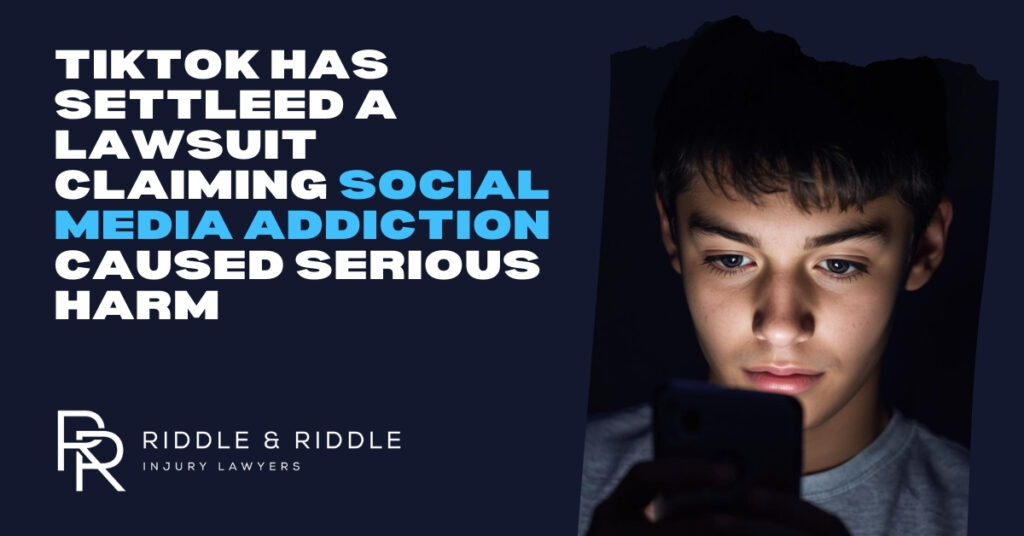
The settlement with TikTok came on the same day that jury selection was to begin in the case of K.G.M. v. Meta et al. in the Los Angeles Superior Court. While TikTok and Snap have opted to settle their claims privately, the battle for accountability is just heating up for Meta and YouTube. This case was one of several “bellwether” test trials drawn from hundreds of similar lawsuits across the country seeking accountability from Big Tech over the psychological harms allegedly associated with algorithmic engagement and potentially addictive social media design.
This development highlights the growing momentum of litigation holding social media companies responsible for how their platforms impact youth mental health — a legal fight that continues to evolve in 2026.
IMPORTANT: TikTok and other defendants in social media addiction and harm cases, including Meta, YouTube, Snap, and Roblox, strongly deny any liability and/or wrongdoing.
What the TikTok Settlement Signals
While the specific terms remain confidential, this resolution reflects the growing legal exposure these companies face. These lawsuits claim that features such as endless scroll, addictive push notifications, and social reward mechanisms are not just “features”—they are dangerous product designs that bypass adolescent impulse control.
These lawsuits broadly claim that these features contribute to excessive use and a range of serious harms for young people, including depression, anxiety, body image issues, eating disorders, and suicidal ideation.
Even though TikTok has settled this individual case, TikTok, Meta, YouTube, Snap, and Roblox strongly deny any liability or wrongdoing and continue to vigorously defend against these allegations.
How Social Media Harm Lawsuits Work
At Riddle & Riddle Injury Lawyers, we’ve seen firsthand how these claims are structured and what it takes to be eligible for a social media harm lawsuit.
Who May Qualify
To be considered for a social media harm claim, plaintiffs typically must meet specific criteria, including:
- Use of one or more major social media platforms such as Facebook, Instagram, TikTok, or Snapchat
- Age at time of use between 8 and 18 years old during the relevant period
- Current age typically 25 years or younger
- High frequency of use, often daily use of three or more hours per day
- Verifiable harm, including documented mental health issues such as depression or anxiety, body dysmorphia, eating disorders, self-harm, or suicidal ideation
Medical or mental health treatment records are usually required to support these claims, although attestation of intent to seek treatment may be accepted in some cases. For a FREE case review with an experienced injury lawyer handling social media harm claims at Riddle & Riddle, call 1-800-525-7111. Since 2000 alone, we’ve recovered over $900 million in compensation for our deserving clients (see disclaimer below) and we are determined to seek justice for potential victims.

These lawsuits seek compensation for the harm suffered and may also push for changes in how platforms design features that affect youth engagement.
IMPORTANT: TikTok and other defendants in social media addiction and harm cases, including Meta, YouTube, Snap, and Roblox, strongly deny any liability and/or wrongdoing.
Social Media Litigation Is Part of a Broader Push for Accountability
The TikTok case is just one chapter in a broader litigation movement seeking to hold tech platforms accountable for alleged harm to young users. For years, tech companies used Section 230 as a shield, claiming they weren’t responsible for what users post. However, Judge Carolyn Kuhl recently ruled that features like infinite scrolling, autoplay, and manipulative push notifications are “product designs,” not speech.
This means a jury can finally decide if these features are inherently dangerous to developing brains. Similar legal theories that challenge design features and corporate practices are being tested across jurisdictions. Families, school districts, and government entities are part of this wave of claims seeking clearer standards for platform safety.
How Roblox Lawsuits Fit Into the Online Safety Landscape
While social media lawsuits focus on addictive design, the Roblox litigation centers on safety failures that allegedly exposed children to physical and psychological danger.
Key Allegations on Roblox Claims:
- Grooming and Exploitation: Claims that the platform failed to prevent predators from contacting minors.
- Inadequate Moderation: Failure to police in-game chat and “off-platform” transitions to apps like Discord.
- Safety Over Profit: Allegations that Roblox prioritized user engagement over implementing robust age-verification tools.
What the Roblox Claims Involve
Roblox is a gaming and social platform extremely popular with children and teens. The lawsuits allege that Roblox and related services, including the chat platform Discord, failed to implement effective safeguards to prevent child sexual exploitation.
Allegations include insufficient moderation of in-game chat and messaging features, inadequate age verification and parental controls, and platform policies that prioritize engagement over child safety. Families argue that these alleged failures allowed predators to groom and exploit minors through Roblox in-game and off-platform communications.
Many of these cases are now consolidated into a federal multidistrict litigation, or MDL, which helps streamline dozens of individual lawsuits with similar legal questions. While the litigation is still unfolding and no global settlement or verdict has been reached, the establishment of the MDL is an important milestone in how these claims will be handled.
Why Riddle & Riddle Is Involved
At Riddle & Riddle Injury Lawyers, we’re helping families navigate both social media harm and Roblox lawsuits because both involve profound harms allegedly tied to technology affecting children.
For social media harm claims, we evaluate patterns of prolonged platform use during youth, verified mental health consequences, and platform features that may have contributed to harm.
For Roblox lawsuits, we assess evidence of safety and supervision failures, communications that enabled exploitation, and the lasting impact on child victims and their families.
We also understand how federal litigation structures like MDLs and bellwether trials work, which can influence legal strategy, evidence gathering, and potential outcomes in these complex cases. If you believe that your child has been harmed due to social media addiction on TikTok, Facebook, Instagram, Snapchat, or YouTube, or suffered sexual abuse or assault due to alleged failures by Roblox, call 1-800-525-7111 for a FREE case review.
There are no upfront costs and we don’t get paid unless you do. Please call 1-800-525-7111 and let’s review your claim. You may qualify for a social media harm or Roblox lawsuit and be entitled to significant financial compensation.
Final Thoughts: Accountability in the Digital Age
The January 2026 TikTok settlement illustrates how courts are becoming an important venue for challenging technology giants. Whether the issue is addiction and mental health impacts on TikTok, YouTube, Facebook, Instagram, or Snapchat, or safety failures on gaming platforms like Roblox, more families are seeking legal paths to accountability for children harmed in digital environments.
If you believe that someone you love has suffered serious harm related to social media or an online gaming platform, it’s important to understand your rights and options.
Call Riddle & Riddle Injury Lawyers’ social media harm lawyers for a free case review at 1-800-525-7111. There are no upfront costs, and no attorney fees unless we win your case and you receive compensation.