

Riddle & Riddle Injury Lawyers | November 7, 2016 | Personal Injury
***IMPORTANT UPDATE: As of May 4, 2020, we are no longer investigating, reviewing or accepting these claims due to time limitations.
For the third time in five years, a recall has been announced for a Stryker prosthetic device due to concerns of metallic debris entering the bloodstream. There are already currently several lawsuits pending regarding Stryker devices, and several classes of the devices have been incorporated into class action suits and settlements. If you have had a Stryker device implanted within the last several years, you should contact an attorney to learn of your legal rights.
What exactly is wrong with Stryker devices?
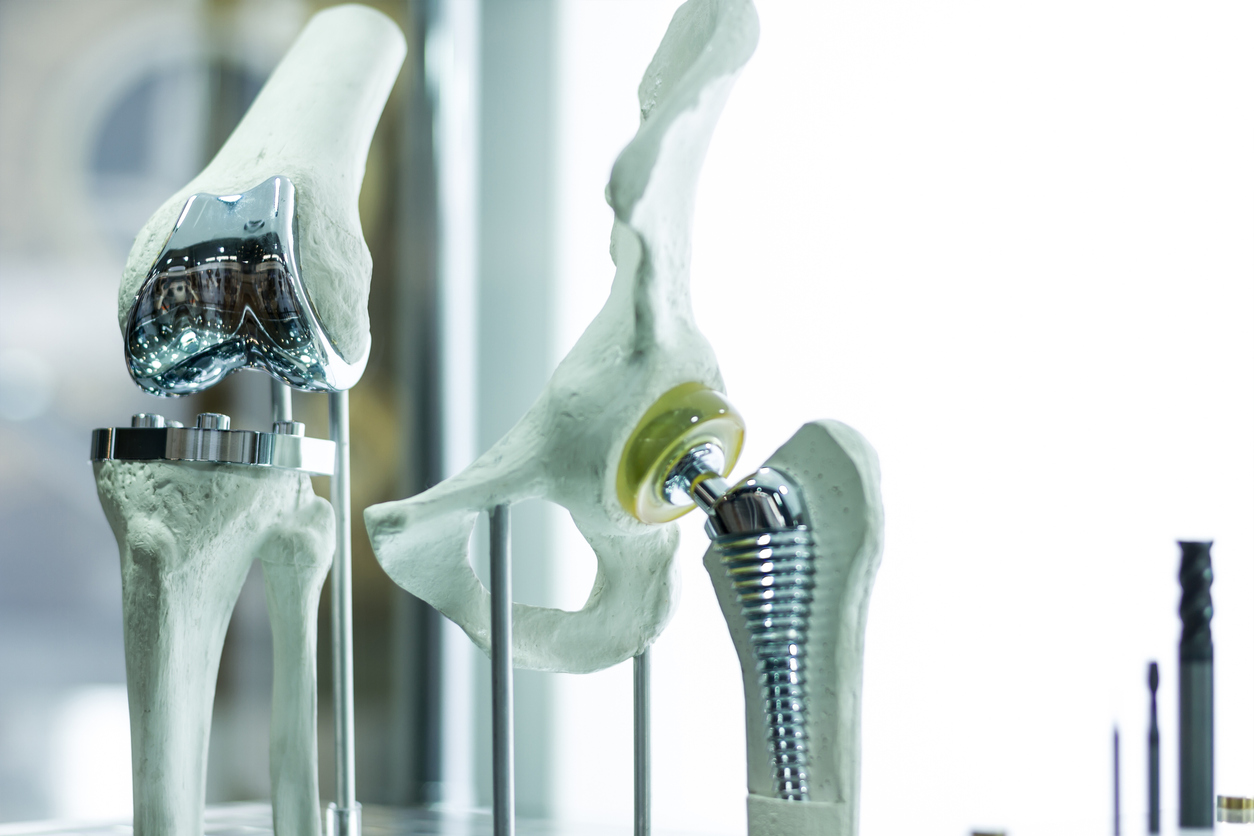
Essentially, Stryker devices involve metal on metal design. When a metal ball rubs against a metal socket thousands of times, the pieces will begin to wear. When metal rubs on metal, pieces of debris can wear away and enter the blood stream. This metallic debris can cause problems. Some patients report no problems. Others report mild symptoms such as swelling. But some patients experience far more excessive symptoms. Patients who have Stryker metal-on-metal design implants are recommended to undergo blood tests to check for chromium and cobalt levels. Excessive levels of these metals in the blood system can result in serious swelling in the area of the implant, or even blood poisoning throughout the patient’s entire body which can result in damage to internal organs. Depending on the results of blood tests, it may be wise to remove the device. But even if blood tests are negative and no symptoms arise, many patients prefer to have the device removed in order to avoid the potential for serious complications, particularly if the patient plans an active lifestyle or has some history or allergic reactions to metal or chemicals.
Indeed, Stryker’s latest recall notice warns of other failures beyond metallic debris entering the blood stream. The August 2016 notice warns of complaints of locking of the device, dissociation or disunion, and even fracture of the device. Essentially, if the hip wears away enough, there may not be enough metal left to keep it structurally intact and kept together and the ball can come loose from the socket or the joint can or even snap.
What Stryker devices are under recall?
Stryker’s latest safety notice covers all LFIT Anatomic Cobalt Chromium V40 Femoral Heads manufactured and sold through 2011. Stryker’s LFIT Anatomic Cobalt Chromium V40 Femoral Head is a component of many popular Stryker Total Hip Replacement Systems, including but not limited to, Stryker’s Accolade, Accolade C, Meridian, Rejuvenate, ABG II and Omnifit prosthetics.
Previous recalls dating back to 2012 involved any devices containing the Rejuvenate or RBG II modular neck hip stems. In November of 2014, Stryker agreed to a settlement worth an estimated $1.4 billion to resolve a class of claims for persons affected by the Rejuvenate or RBG II devices. That settlement was ruled upon in New Jersey but includes coverage for cases throughout the country. The terms of the settlement are complex, but provided for recovery of up to $600,000.00 per claimant. The settlement included no hard cap, meaning that Stryker could be liable for additional monies depending on the number of valid claims presented. Therefore, claimants affected by these recalled devices are not precluded from recovery because other claimants submitted their claim first. However, deadlines and statutes of limitations can apply, so it is important to act promptly to avoid time bars to claims.
Are all metal-on-metal hip devices problematic, or just Stryker hips?
In 2013, DePuy Orthopaedics, a subsidiary of Johnson & Johnson, agreed to a $2.475 billion charge to settle thousands of claims related to injuries suffered as the result of defective ASR hip implant parts. The settlement was approved by U.S. District Judge David A. Katz in the Northern District of Ohio, who is overseeing the consolidated litigation, along with the other state court judges where cases were filed. DePuy had faced more than 10,000 cases in the U.S. related to its ASR XL Acetabular and ASR Hip Resurfacing Systems, which it recalled in August 2010 amid reports that unusually high rates of the devices failed after just five years.
In 2016, a federal jury in Dallas found Johnson & Johnson and its subsidiary, DePuy Orthopedics, liable for injuries resulting from the DePuy “Pinnacle” metal-on-metal hip devices. The jury awarded five plaintiffs a total of $497.6 million after agreeing the products caused complications, including metal poisoning and revision surgeries. There are at least 8,000 other reported cases of persons claiming adverse reactions from DePuy hips. While all claims are not necessarily valid and recoverable as a result of this one trial, a trial of this sort is referred to as a “bellwether”, meaning both sides use it as a guide to determine what a jury felt about the evidence, and therefore as a guide to assist in settlement of additional cases. Patients with DePuy Pinnacle hip implants or any other metal-on-metal design should consult an attorney to learn about their legal rights.
Would my case have to go to court?
***IMPORTANT UPDATE: As of May 4, 2020, we are no longer investigating, reviewing or accepting these claims due to time limitations.
Lawsuits are expensive for both sides. Even when you hear about huge verdicts, you have to remember that years of appeals can follow. Even if appellate courts uphold a jury’s verdict, the costs of experts, appellate lawyers, depositions, etc. can be extreme, for both sides. Therefore, settlements are usually in the best interest of everyone involved. The idea of a bellwether trial like the DePuy Pinnacle trial is not that the two sides will never be able to reach a settlement. The idea is that both sides will use the verdict as a guide to assist in ball parking settlement range. Every case is different, and laws in each state or jurisdiction can vary. And every jury is different, so another jury could hear the same trial and come to a very different conclusion. It is unlikely that every trial would result in a $500 million verdict. Some juries may award $0. A large number of trials may come out somewhere in the middle. But trials help both sides see the potential value of a case, and usually, after an expensive trial, settlement discussions begin immediately involving other claims.
***IMPORTANT UPDATE: As of May 4, 2020, we are no longer investigating, reviewing or accepting these claims due to time limitations.
At Riddle & Riddle Injury Lawyers, we are prepared to review your claim if you have a Stryker hip or another type of metal on metal hip and help you determine if your metal hip has been recalled and if so, do you have a potential claim. We answer phone calls and emails 24 hours a day, seven days a week. We strive hard to get justice for all our clients including those injured by defective medical devices or bad drugs.