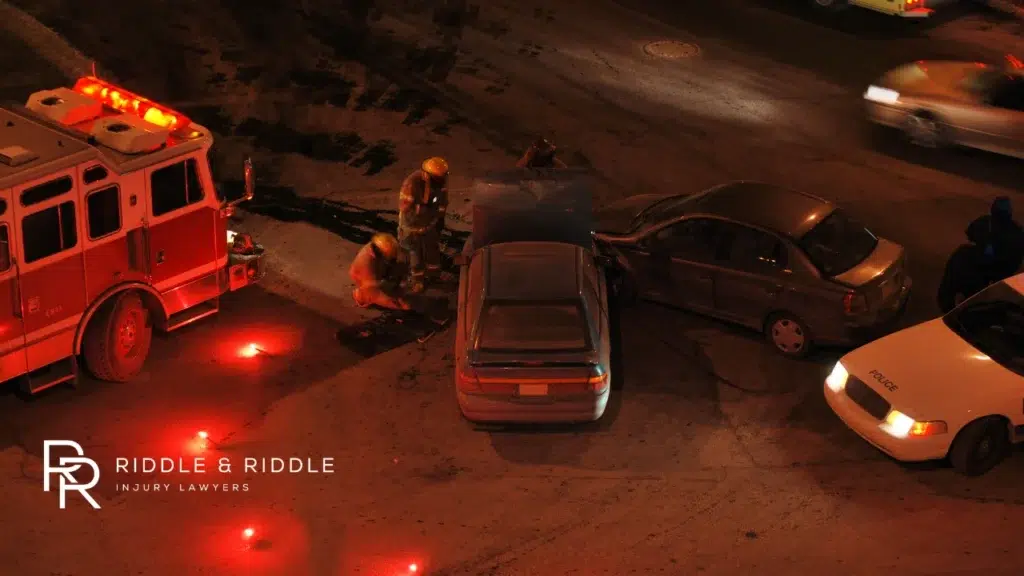
How Fault Is Investigated and Proven in an NC Motorcycle Crash
Proving liability after a motorcycle crash requires demonstrating that another driver failed to exercise reasonable care on the road and that their negligence directly caused your injuries and financial losses. Gathering proper evidence in a motorcycle accident case is critical to building a strong liability claim.
Insurance companies launch immediate investigations to minimize payouts. To counter their efforts, a dedicated North Carolina motorcycle accident lawyer gathers physical, digital, and forensic evidence to establish fault:
Official Police Reports: Investigating officers log road conditions, weather, traffic violations, and citations issued (such as failure to yield right-of-way during a left turn).
Eyewitness Testimony: Neutral statements from non-party drivers, pedestrians, or nearby business owners provide crucial confirmation of how the collision unfolded.
Video Footage: Video captured by helmet-mounted GoPro cameras, municipal traffic feeds, nearby business surveillance systems, or vehicle dashcams provides objective visual proof. Understanding how dash cam evidence is used in North Carolina accident cases can help clarify how visual recordings establish the exact sequence of events leading to a collision.
Physical & Mechanical Evidence: Scrape marks on asphalt, paint transfer between vehicles, crush depth, and abrasion patterns on helmet or leather gear reveal the speed, angle, and direction of impact.
Vehicle Black Box & GPS Data: Electronic Control Modules (ECMs) in passenger cars and commercial trucks record pre-crash speed, steering input, and braking force.
Can You Still Sue If You Were Partially at Fault?
Understanding how North Carolina evaluates shared fault is critical for any injured rider.
Under the doctrine governing what is contributory negligence, if an injured party contributed in any way to the cause of the crash, they are legally barred from recovering financial compensation. Insurance adjusters routinely claim riders were speeding slightly, weaving, or violating traffic laws to invoke this 1% bar and deny claims outright.
However, being accused of partial fault does not automatically mean your claim is over. Two major legal exceptions can defeat a contributory negligence defense:
The Gross Negligence Exception
Contributory negligence does not bar recovery if the defendant driver’s conduct rose to the level of gross negligence, defined as a conscious, willful, or wanton disregard for the safety of others.
DWI / Drunk Driving: Operating a motor vehicle under the influence of alcohol or drugs is widely recognized under NC law as gross negligence. If an impaired driver strikes a motorcyclist, the defense cannot use minor rider negligence to block compensation.
Extreme Recklessness: Drivers engaging in street racing, extreme road rage, or driving at absurdly dangerous speeds are barred from using contributory negligence as a defense.
The "Last Clear Chance" Doctrine
If a motorcyclist accidentally creates a dangerous situation on the road, they may still recover full damages if their attorney proves that the other driver had the Last Clear Chance to prevent the crash.
To successfully apply the Last Clear Chance doctrine, four specific legal elements must be established:
The rider negligently placed themselves in a position of peril.
The rider was unable to escape or avoid the impending danger.
The defendant driver knew—or should have known—of the rider’s danger and inability to escape.
The defendant driver had the physical time, space, and ability to avoid hitting the rider but failed to act safely.
Real Case Example ($1,625,000 Recovery): In a highway injury case handled by our legal team, the defense initially argued that a pedestrian/rider was contributorily negligent for crossing a busy road. Our attorneys successfully demonstrated that the oncoming driver had ample time and sight distance to see the victim and avoid the collision—the “last clear chance.” The case resulted in a $1,625,000 settlement for our client.
Can You Sue for a "No-Contact" Motorcycle Accident in North Carolina?
A common misconception among riders is that physical vehicle-to-vehicle contact is required to file an injury claim. In reality, many of the most severe motorcycle crashes are no-contact accidents.
What Is a No-Contact Motorcycle Accident?
A no-contact crash occurs when a negligent driver causes a hazardous situation that forces a motorcyclist to take immediate, evasive action—such as swerving sharply, locking the brakes, or laying the motorcycle down—to avoid a catastrophic broadside or head-on collision.
Common examples include:
A driver turning left directly across an oncoming rider’s right-of-way.
A vehicle abruptly changing lanes into a motorcyclist’s lane without checking blind spots.
A car pulling out from a side street or driveway without looking.
Even though the car never physically impacts the bike, the driver’s negligence is the direct cause of the rider’s crash and resulting injuries.
Proving Fault in Phantom Driver Crashes
In many no-contact accidents, the negligent driver keeps driving either completely unaware that they forced a motorcycle off the road or intentionally fleeing the scene. These are often referred to as “phantom driver” crashes.
To prove fault and secure compensation in a no-contact wreck, your legal team will gather:
Witness statements confirming the driver’s dangerous maneuver.
Nearby business surveillance or traffic camera footage.
Physical tire marks, gouge marks, and bike wreckage patterns matching an evasive maneuver.
Recovering Compensation Through Uninsured Motorist (UM) Coverage
If the phantom driver cannot be identified or located, you can still recover compensation for your medical bills, lost wages, and pain and suffering by filing an Uninsured Motorist (UM) claim through your own motorcycle or auto insurance policy.
Because filing a UM claim puts you in an adversarial position against your own insurance company, working with an experienced attorney ensures your insurer treats your claim fairly.
Steps to Take After a Motorcycle Accident to Protect Your Claim
What you do in the minutes and days following a motorcycle collision directly impacts your ability to establish fault:
Call Law Enforcement Immediately: Ensure a police officer responds to the scene and files an official crash report.
Seek Immediate Emergency Medical Care: Diagnostics like CT scans and MRIs are vital for identifying traumatic brain injuries, internal bleeding, and fractures right away.
Document the Crash Scene: Take photos of skid marks, fluid trails, road hazards, traffic signals, damaged gear, and vehicle damage.
Never Admit Fault or Apologize: Avoid phrases like “I’m sorry” or “I didn’t see them turn,” as insurance adjusters will twist these polite gestures into legal admissions of guilt.
Contact an Attorney Before Giving Statements: Refuse recorded statements to insurance adjusters until you have consulted a lawyer who understands NC motorcycle laws.
Riddle & Riddle is a version of the Legal Dream Team.
Elizabeth Ramos, Riddle & Riddle client
How Riddle & Riddle Injury Lawyers Can Help
Navigating complex liability disputes, pure contributory negligence defenses, and phantom driver insurance claims requires an aggressive legal team with deep investigative resources.
At Riddle & Riddle Injury Lawyers, our motorcycle accident attorneys bring over 171 years of combined legal experience. Our firm history about us highlights our dedicated in-house team of experienced investigators—including retired law enforcement officers—who deploy to crash scenes immediately to preserve physical evidence, locate surveillance video, and reconstruct the accident.
To schedule your free, no-obligation motorcycle accident lawsuit consultation, call us today at (800-525-7111 or reach out through our easy online contact form.