
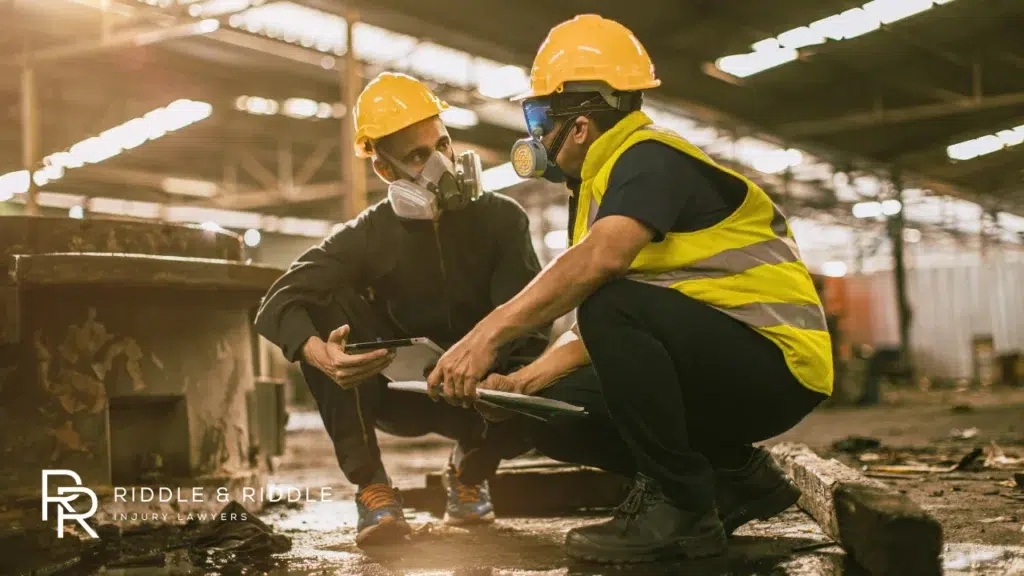

The Primary Types of Workplace Hazards
Understanding the different categories of workplace hazards is the first step toward preventing accidents and identifying employer negligence.
Physical Hazards
Physical hazards are environmental factors or physical items that can cause bodily harm, even without direct physical contact. They are among the most common causes of workplace injury claims and include:
Slip, Trip, and Fall Hazards: Wet or oily floors, cluttered walkways, uneven flooring, loose wiring, and dimly lit stairwells.
Dangerous Heights: Unguarded elevated platforms, scaffolding, roof edges, or collapsing structures.
Defective or Unmaintained Machinery: Equipment lacking required safety guards, emergency shut-offs, or proper maintenance. If a defective machine part or manufacturing flaw causes your injury, a skilled North Carolina product liability lawyer can help you file a third-party claim against the equipment manufacturer.
Excessive Noise: Continuous high-decibel noise levels that cause permanent hearing loss or acoustic trauma over time.
Chemical Hazards
Chemical hazards occur when workers are exposed to hazardous liquid, gas, vapor, dust, or solid chemical substances. Exposure can cause immediate acute harm or long-term occupational diseases:
Toxic Chemicals & Solvents: Paints, industrial cleansers, degreasers, acids, and heavy metals that cause severe chemical burns, skin corrosion, or systemic poisoning.
Harmful Gases & Fumes: Toxic gas leaks, carbon monoxide build-up, welding fumes, or chemical vapors leading to asphyxiation, respiratory damage, or lung disease.
Combustible Dusts & Gases: Flammable substances that create serious fire and explosion risks in enclosed work spaces.
Biological Hazards
Biological hazards involve exposure to living organisms or biological materials that cause infectious diseases, severe illnesses, or chronic health conditions. Common in healthcare, agriculture, laboratories, and sanitation services, these hazards include:
Bacteria, viruses, and bloodborne pathogens (such as Hepatitis, HIV, or respiratory viruses)
Fungal spores, mold, and airborne biological toxins
Contaminated medical waste, needles, or animal vectors
Ergonomic Hazards
Ergonomic hazards occur when a worker’s physical body posture, workstation setup, or job tasks put excessive strain on the musculoskeletal system. Over time, unaddressed ergonomic hazards lead to painful occupational diseases, including:
Repetitive Motion Tasks: Continuous assembly line work, typing, or packing that leads to carpal tunnel syndrome, tendonitis, or bursitis.
Frequent Heavy Lifting: Repeated pushing, pulling, bending, reaching, or lifting heavy objects without mechanical aid, causing severe back and joint damage.
Poor Workstation Design: Non-adjustable chairs, awkward work heights, and improper posture requirements.
Psychological Hazards
Psychological hazards impact an employee’s mental health, emotional well-being, and cognitive function. Severe workplace stress or hostile work environments can lead to physical illness, distraction, and higher accident rates:
Workplace bullying, harassment, and discrimination
Workplace violence or threats of physical harm from customers or co-workers
Excessive, unmanageable workloads and extreme fatigue from mandatory overtime
High-Risk Industry Focus: Workplace Dangers in Manufacturing & Factories
While hazards exist in every sector, manufacturing and industrial environments consistently rank among the most dangerous workplaces in North Carolina. Assembly lines, heavy machinery, and fast-paced production schedules expose workers to severe daily risks.
According to data from the Bureau of Labor Statistics (BLS), manufacturing workers face elevated risks across seven primary accident categories:
| Manufacturing Accident Category | Primary Causes & Danger Factors |
| Overexertion & Strain | Physical exhaustion caused by constant pushing, pulling, heavy lifting, reaching, and bending on assembly lines. |
| Machinery & Equipment Accidents | Fingers, hands, or limbs pulled into conveyor belts, punch presses, or rotating gears due to missing machine guards, employer shortcuts, or general personal injury negligence. |
| Industrial Transportation Accidents | Collisions, tip-overs, and pedestrian impacts involving forklifts, tuggers, motorized hand trucks, or loading dock vehicles. |
| Toxic Exposure | Inhalation or skin contact with industrial solvents, heavy chemicals, toxic gas, extreme heat, or high-decibel noise. |
| Contact with Objects & Equipment | Workers struck by falling inventory, flying debris, discharged machine parts, or swinging mechanical arms. |
| Fires & Explosions | Chemical reactions, gas leaks, electrical arcs, dust explosions, or machinery overheating. |
| Slips, Trips, & Falls | Slipping on spilled lubricants, oil, or water on factory floors, or falling from elevated maintenance platforms. |
Common Injuries Caused by Workplace Hazards
Workplace accidents can result in a wide spectrum of medical conditions, ranging from acute traumatic injuries to chronic, debilitating occupational diseases:
Musculoskeletal & Soft Tissue Damage: Torn ligaments (ACL/MCL), torn rotator cuffs, herniated discs, severe muscle sprains, dislocations, and hyperextensions.
Fractures & Amputations: Broken bones, crushed limbs, and traumatic or surgical amputations of fingers, hands, or legs caused by heavy machinery.
Head & Traumatic Brain Injuries (TBIs): Concussions, skull fractures, and severe brain trauma caused by falling objects, slips, or equipment impacts.
Burns & Chemical Corrosions: Thermal burns from fires/steam, electrical shocks, and chemical burns from corrosive acids or solvents.
Repetitive Strain & Nerve Damage: Carpal tunnel syndrome, tarsal tunnel syndrome, nerve compression, chronic back impairment, and occupational hearing loss.
Respiratory & Systemic Diseases: Chemical asphyxiation, occupational asthma, toxic poisoning, radiation sickness, and dermatitis from hazardous exposures.
Employer Safety Responsibilities Under OSHA Rules
The Occupational Safety and Health Act requires employers to maintain a working environment free from recognized hazards that cause or are likely to cause death or serious physical harm.
To fulfill these legal obligations, employers must implement a multi-layered safety strategy:
Engineering Controls: Installing physical machine guards, emergency shut-off switches, proper ventilation systems, and safety handrails.
Personal Protective Equipment (PPE): Providing employees with appropriate hard hats, steel-toed boots, safety goggles, respirators, earplugs, and chemical-resistant gloves at no cost to the worker.
Comprehensive Safety Training: Conducting mandatory training on machine operation, Lockout/Tagout procedures, Chemical Hazard Communication (SDS), and emergency response protocols.
Routine Facility Maintenance: Keeping walkways clean, dry, and free of debris, repairing damaged flooring, and inspecting industrial vehicles regularly.
What to Do If You Are Injured by a Workplace Hazard in North Carolina
If you suffer a job-related injury or develop an occupational disease caused by a workplace hazard in North Carolina, taking prompt legal and medical steps is essential to protect your right to workers’ compensation benefits:
Seek Immediate Medical Treatment: Inform the medical provider that your injury or condition is work-related so proper medical records are generated.
Provide Written Notice to Your Employer: Under North Carolina law (N.C.G.S. § 97-22), you must give your employer written notice of the accident within 30 days. Verbal notice to a supervisor is not always sufficient.
File Form 18 with the Industrial Commission: File an official Form 18 with the North Carolina Industrial Commission (NCIC) to preserve your formal claim.
Follow All Doctor-Ordered Restrictions: Do not perform tasks that exceed physical restrictions assigned by your treating physician.
How Riddle & Riddle Injury Lawyers Can Help
Navigating a complex workers’ compensation claim while recovering from a serious work injury can be daunting—especially when employers or insurance carriers attempt to deny claims, downplay injury severity, or force injured workers back to work too soon.
At Riddle & Riddle Injury Lawyers, our work injury team is led by Attorney Adam Smith, a Board-Certified Specialist in Workers’ Compensation Law recognized by the North Carolina State Bar.
Whether you need a dedicated North Carolina workers’ compensation lawyer to appeal a denied claim or investigate third-party liability, we aggressively gather medical records, handle all filings with the Industrial Commission, and fight to ensure you receive full medical coverage and weekly wage replacement benefits.
Call Riddle & Riddle Injury Lawyers today at (800) 525-7111 or contact us online to schedule a free, confidential case evaluation. We are available 24/7 by phone, email, text, or video conference to help you get the justice and compensation you deserve.