
The Complete Guide To Driving With Visual Impairment
Visual impairment is a significant but often underreported contributor to car accidents across the United States. Although all drivers are held to a universal duty of care, the requirements for obtaining and maintaining a driver’s license vary widely from state to state, creating a patchwork of differing standards.
That said, the ability to drive yourself from place to place is an essential part of feeling independent. In this comprehensive guide, we will cover the legal framework governing driving eligibility for people with vision impairment across the country. Learn more today by contacting Riddle & Riddle Injury Lawyers, a family-run, North Carolina-based law firm.
How Vision Impairment Affects Drivers in NC and Nationwide
Visual impairment is a major and often underrecognized public health issue in the United States. Approximately 7 million Americans have vision impairment, and millions more are at risk of severe vision loss. Vision-related conditions become increasingly common with age, making aging one of the strongest predictors of declining visual function behind the wheel.
Common Causes of Vision Loss
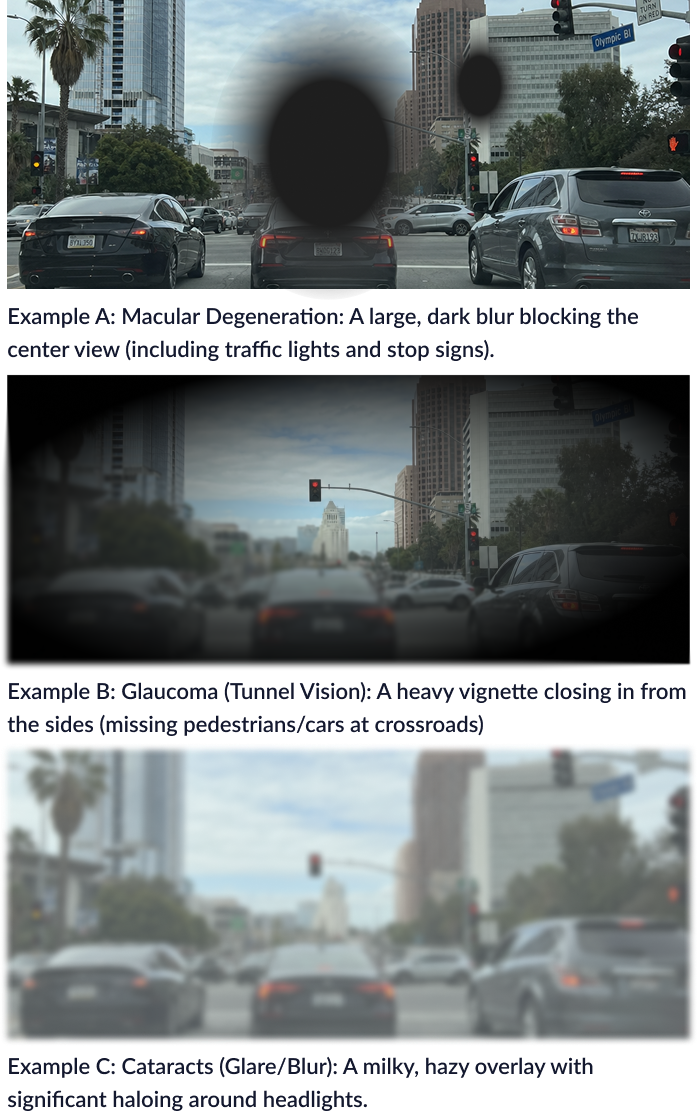
The American Academy of Ophthalmology reports that major causes of vision loss in the U.S. include glaucoma, affecting about 3 million Americans, age-related macular degeneration, and diabetic retinopathy. All of these conditions can impair driving by decreasing contrast sensitivity, peripheral vision, and night vision.
Vision Impairment and Older Drivers in North Carolina
According to the National Highway Traffic Safety Administration, older adults face higher crash fatality rates per mile driven and are more vulnerable to vision-related driving limitations, especially in low-light and complex traffic conditions. This is particularly a concern in North Carolina, which has one of the largest aging populations in the Southeast, highlighting the importance of addressing vision-related crash risk on state roadways.

Physician Reporting Laws: Mandatory vs. Voluntary
Residents of any state need to understand reporting laws regarding doctor-patient privilege and public safety. Some states have mandatory reporting, such as Pennsylvania and Oregon, where doctors are legally required to report vision-impaired drivers. However, voluntary states, including North Carolina, tend to place the responsibility on the driver or their family to report vision impairments. Keep in mind, there are exceptions to this rule for legal blindness.
Risks and Adaptations for Drivers With Vision Loss
Disease-specific findings indicate that glaucoma-related peripheral vision loss is associated with a higher risk of crashes and at-fault collisions. At the same time, cataracts are associated with increased crash involvement due to diminished contrast and increased glare sensitivity. Overall, there are real, dangerous risks associated with driving with vision loss, such as:
- Reduced reaction time
- Difficulty judging distances
- Trouble reading signs at standard distances
- Glare sensitivity
- Night blindness
- Reduced peripheral awareness.
Individuals who have these impairments may face challenges that make it more difficult to navigate the road safely. Fortunately, adaptive technology can help reduce the risk of accidents and enable people who would otherwise not be eligible to drive.
- Bioptic telescopes: Small telescope lenses mounted on glasses that help drivers with low vision briefly magnify distant objects, often used under strict licensing conditions.
- Anti-glare lenses: Specialized glasses that reduce glare from headlights and sunlight, improving contrast and visibility, especially during night driving.
- Heads-up displays: Windshield- or visor-mounted displays that project speed, navigation, and alerts into the driver’s line of sight, reducing the need to look away from the road.
- Lane departure warning systems: Vehicle safety features that alert drivers if they unintentionally drift out of their lane, helping compensate for reduced visual attention or peripheral awareness.
- Forward collision warning systems: Sensors and cameras that detect potential front-end collisions and alert the driver to brake or take corrective action.
- Adaptive cruise control: An advanced system that automatically adjusts vehicle speed to maintain a safe following distance from traffic ahead.

Vision Requirements To Drive in NC and How They Compare Nationwide
In North Carolina, drivers must meet minimum vision eligibility requirements in order to obtain or renew a driver’s license. The state’s provisions for operating a vehicle are generally stricter than the national standard overall.
Visual Acuity and Peripheral Vision Standards
In North Carolina, a driver generally needs 20/40 or better in at least one eye to receive an unrestricted license. If corrective lenses are needed, the license may be restricted to require them. North Carolina’s Medical Review Unit may also evaluate vision conditions and impose restrictions such as corrective lenses, daylight-only driving, no interstate driving, speed limits, or radius/geographic limits.
How Other States' Vision Standards Compare
Some states take a more flexible approach than North Carolina. For instance, Washington allows drivers with vision as poor as 20/70, typically with restrictions such as daylight-only driving or the use of corrective lenses. California also permits licensing for drivers with reduced vision in some cases, including up to around 20/70, depending on the circumstances and whether restrictions are placed on the license.

Restricted License Categories
If state requirements are not met, drivers may need to submit medical and vision reports, take a driving test, or face restrictions. This may include the use of corrective lenses or limitations like daytime-only driving, no interstate driving, geographic restrictions, and bioptic telescope licenses.
When a License Can Be Restricted or Revoked
In North Carolina, a license may be restricted, suspended, or revoked if a vision issue is identified during the process. Drivers must undergo a vision exam when renewing their licenses. Eye care professionals and physicians may report medical conditions that could impair safe driving, affecting a person’s ability to maintain their license.
sWhen any red flags surface, the DMV Medical Review Unit may request medical or vision reports and additional testing to evaluate driving safety. If a risk is found, the DMV can impose restrictions, suspend, or revoke the license. However, drivers may request a hearing to challenge the decision or provide further evidence.

When Driving With Impaired Vision Becomes Legal Negligence
State legislators are consistently looking for ways to make driving more readily available to those with visual impairments. Still, all drivers can be held liable for failing to uphold a general duty of care, including cases involving impaired vision.
North Carolina follows a fault-based system in determining who is liable for an accident. Under the doctrine of negligence per se, a driver can violate vision-related licensing laws in several ways, from driving without required corrective lenses to ignoring DMV restrictions.
Knowledge of visual deficiencies plays a key role in these cases. A driver who knew, or reasonably should have known, that their vision had deteriorated and continued driving anyway can be held liable. In addition, family and caregivers may also be held responsible when they knew an aging relative was no longer safe to drive and did not act.
sNorth Carolina’s pure contributory negligence doctrine can restrict a person from wholly recovering compensation if they are liable for the incident. This means that if an individual is found to be even 1% at fault for the accident, they can be completely barred from receiving a damages award.
Frequently Asked Questions About Driving With Visual Impairment
Can I Drive in Other States With a Restricted NC License?
Do I Have To Take a Vision Test Every Time I Move States?
Can a Family Member Be Sued for a Relative’s Vision-Related Crash?
When Vision-Related Crashes Lead to Legal Claims
Whether you or a loved one has been in a vision-related accident, it is important to understand your legal options and how to get the most out of a claim. At Riddle & Riddle Injury Lawyers, our compassionate legal team helps accident victims navigate complex liability cases in and around North Carolina.
Call our office at 800-525-7111 to schedule a free case review with a seasoned attorney. You never pay unless we win your case, removing the financial burden that many victims worry about. Contact us to get started today.
