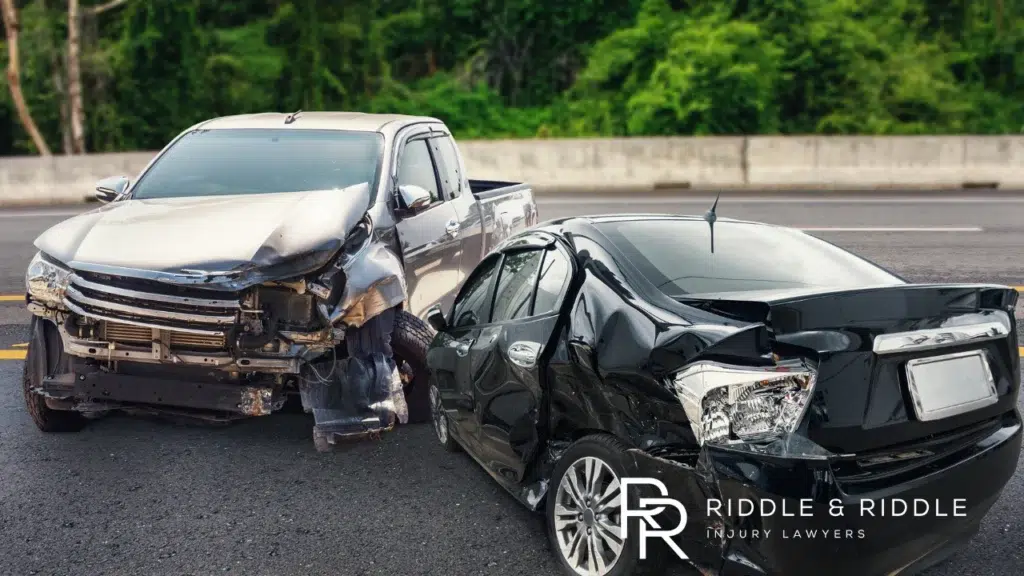

The reality is often more complicated. North Carolina follows a strict contributory negligence rule that may prevent an injured person from recovering compensation if they are found at fault. However, fault is not always clear after a collision, and what you believe happened may not match the conclusions reached after a full investigation. Evidence may tell a different story, fault allegations can be challenged, and legal exceptions may apply.
If fault is disputed after a crash, a North Carolina car accident lawyer can help evaluate the evidence and determine whether the insurance company’s position is supported by the facts. Riddle & Riddle Injury Lawyers provides free case reviews for injured North Carolinians facing difficult fault questions after a collision.
Yes, You Can Sue, But Partial Fault Can Put Your Recovery at Risk
If you believe you may share some responsibility for a crash, you may assume that you cannot pursue compensation. However, you can still file an insurance claim or lawsuit even when fault is disputed.
Whether you can recover damages often depends on what the evidence shows about your role in the collision. If the other side successfully proves that you contributed to the crash, you may be prevented from recovering compensation. Because of this, fault disputes are often among the most important issues in a North Carolina car accident case.
To understand why fault disputes matter so much, it helps to understand North Carolina’s fault system and how the state’s contributory negligence rule affects accident claims.
How North Carolina's Contributory Negligence Rule Works
North Carolina follows a legal doctrine known as contributory negligence. Under this rule, an injured person may be barred from recovering compensation if their own negligence contributed to the accident.
Most states use some form of comparative negligence, which allows injured people to recover damages even when they share some blame for an accident. North Carolina’s rule is much stricter, making fault disputes especially important in car accident cases.
Fault must be proven through evidence and legal analysis. Under N.C.G.S. § 1-139 and the North Carolina Pattern Jury Instructions on contributory negligence, the defendant bears the burden of proving contributory negligence. An insurance company cannot simply claim that you share fault. The evidence must support that position.
Why You Shouldn't Admit Fault After a Crash
Many people instinctively apologize after an accident, even when they are not sure what happened. Statements such as “I’m sorry” or “I didn’t see you” may later be used by insurance companies as evidence that you accepted responsibility.
In the moments after a collision, it is often impossible to know exactly how the crash occurred. Drivers may be injured, shaken, or missing important information about what another vehicle was doing before impact.
After a crash, it is generally best to:
- Check for injuries: Seek medical attention if needed.
- Contact law enforcement: Request an accident report.
- Exchange information: Collect contact and insurance details.
- Document the scene: Take photos of the vehicles and roadway.
- Limit speculation: Avoid discussing fault at the scene.
If you are asking yourself, “Am I at fault for my car accident in North Carolina?”, remember that fault is a legal determination based on evidence, not a driver’s immediate impression at the scene.
Exceptions That Can Save a Partial-Fault Claim
Although contributory negligence can create a significant obstacle in a North Carolina car accident claim, certain doctrines or additional liability theories may affect whether recovery is still possible.
These may include:
- The last clear chance doctrine: Even if an injured person was negligent, recovery may still be possible if the other driver had the final opportunity to avoid the collision but failed to do so.
- Gross negligence or willful and wanton conduct: In some cases, conduct that goes beyond ordinary negligence may affect whether contributory negligence bars recovery.
- Commercial vehicle accidents: When a crash involves a truck or other commercial vehicle, violations of trucking rules, maintenance requirements, or safety regulations may affect the liability analysis.
- Product liability claims: If a defective vehicle part contributed to the crash, there may be additional claims against a manufacturer, distributor, or other responsible party.
Whether any doctrine, exception, or additional claim applies depends on the specific facts of the case. That makes it important not to assume that an insurance company’s allegation of shared fault is the final word. A thorough investigation may reveal evidence or legal issues that affect your ability to pursue compensation.
How Insurers Use Partial Fault to Deny NC Claims
Insurance companies understand how powerful contributory negligence can be as a defense. As a result, adjusters often look for opportunities to shift blame onto the injured person.
This may occur through recorded statements, selective interpretations of accident reports, or questions designed to obtain admissions that can later be used against you. In some cases, insurers offer quick settlements before the full facts are known or before injuries have been fully evaluated.
These tactics can create additional challenges when responding to a low settlement offer after a car accident. Accepting an early or low offer may limit your ability to recover compensation for future medical care, lost income, or ongoing pain and suffering.
Understanding these tactics can help you protect your claim and make informed decisions during the insurance process.
How Our North Carolina Car Accident Lawyers Protect Your Claim
At Riddle & Riddle Injury Lawyers, we do not simply accept an insurance company’s version of events. Our team conducts an independent investigation to identify the facts and evaluate all available evidence.
Each case is supported by a dedicated legal team that may include attorneys, case managers, investigators, and support staff. The firm also benefits from team members with insurance industry experience and investigators with North Carolina law enforcement backgrounds. This experience helps us understand how insurers evaluate claims and where fault determinations may be challenged.
Our team reviews accident reports, photographs, witness statements, medical records, and other evidence to build a strong case. We also evaluate whether any exceptions may apply and pursue compensation through negotiation or litigation when appropriate.
Talk to a North Carolina Car Accident Lawyer Today
Serving North Carolina since 1985, Riddle & Riddle Injury Lawyers has helped injured North Carolinians navigate complex accident claims and disputes over fault. Our team is committed to providing clear communication, thoughtful guidance, and dedicated support throughout the legal process.
If you have questions about whether partial fault could affect your case, Riddle & Riddle Injury Lawyers offers free case reviews for injured North Carolinians. Call 800-525-7111 or complete our online form to discuss your situation with a North Carolina car accident lawyer and better understand your legal options.