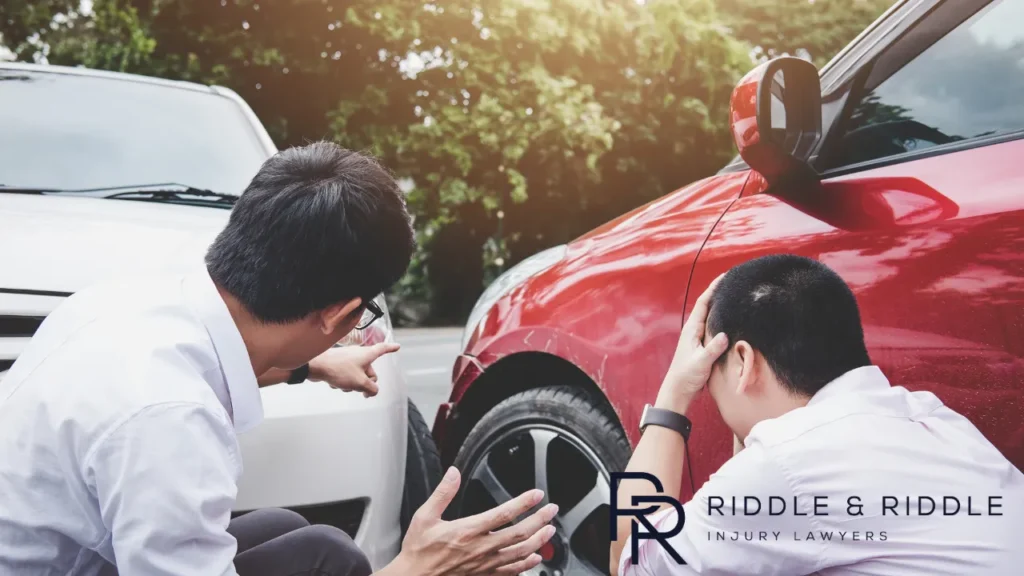


The most common case we see is when our passenger has a claim against her driver, and the other driver is at an intersection with a stoplight. In those cases, both drivers may claim to have the green light, and there are no witnesses. We present a claim against the insurance company for both drivers, and in most cases, we are able to win compensation for our injured passengers, even if both insurance companies share the payment.
What If I Know the Driver?
The most common reason there is an issue with being a passenger and filing a claim against the driver is that the passenger usually knows the driver. Most passengers know their driver, and in most situations, the driver is a family member or close friend. The passenger may be hesitant to file a claim because of the relationship. However, under the law, the relationship does not bar filing a claim against the at-fault driver. Once we explain the law, our passenger-client is comfortable pursuing the claim against the driver.
If you were the passenger in a car accident and were injured due to someone else’s negligence, even your own driver, then you deserve justice and may be entitled to compensation — call (855) 652-2049 today for a FREE consultation with a North Carolina car accident lawyer handling passenger injury claims today.
You can sue the at-fault driver if you’ve been hurt as a passenger in a car accident. Our North Carolina car accident lawyers routinely handle passenger injury cases. Recent case results on behalf of injured passengers (see disclaimer below) include:
- $90,000 settlement — secured for a passenger who was injured when the driver of the vehicle crashed into a tree.
- $1,000,000 settlement — secured for a passenger on a motorcycle who was thrown from the bike and suffered serious injuries after the driver lost control.
- $125,000 settlement — secured for the passenger in a vehicle that was struck head-on by a truck that lost control and swerved across the center line.
Were You Injured as a Passenger in a Car Accident?
If you’ve been injured as a passenger due to a driver’s negligence (including the driver in your own vehicle), you may be entitled to compensation in an injury claim or lawsuit against the at-fault driver. At Riddle & Riddle Injury Lawyers, we’re ready to help however we can.
We may be able to file an injury claim against the at-fault driver’s insurance company, or even file a lawsuit against the at-fault driver, depending on the facts and circumstances of your case. At Riddle & Riddle Injury Lawyers, we have a team of on-staff investigators who can help prove liability and work with our attorneys to start building a strong case for compensation.
Can a Passenger Be at Fault for a Car Accident?
A passenger in most situations cannot be found at fault for a car accident. If, for instance, the driver turned to talk with you and took his or her eyes from the road, if an accident resulted, that is not your fault as the passenger.
However, there are certain cases in which a passenger could be held partially responsible for a car accident. If, for example, you are the passenger and you encourage the driver to speed or drink and drive, and it results in an accident, you may be held partially responsible. If the passenger yanks the wheel causing the driver to crash, then the passenger may be liable for the accident. In these types of cases, a passenger injury claim against the driver would likely fail to win compensation.
Contributory Negligence
In North Carolina, the law of contributory negligence prevents a plaintiff from recovering compensation if he or she is partially responsible for the accident. This law is often used by insurance companies and defense counsel to avoid paying compensation in car accidents.
Assuming Risk as a Passenger
In some cases, you may not be able to recover compensation in an injury claim as a passenger, because you assumed some level of risk when you choose to ride in a vehicle driven by another person.
For instance, if you decide to ride as a passenger in a vehicle driven by someone who has had too much to drink, then you’ve assumed a certain level of risk. In situations like this, defense counsel and/or the insurance company may argue that you are barred from recovery because you assumed that risk when you knowingly got in the vehicle with a driver who was impaired.
These cases are complicated, however, and an experienced passenger injury lawyer can help. Remember, there are no attorney fees unless we win your case and you receive compensation.
They made a hard time in my life easier to endure.
Melissa C., Riddle & Riddle Injury Lawyers client
Contact a Personal Injury Lawyer from Riddle & Riddle Injury Lawyers for Help Today
For more information, please contact Riddle & Riddle Injury Lawyers to schedule a free consultation with a personal injury lawyer in North Carolina today. We have twelve convenient locations in North Carolina, including Greenville, Raleigh, Goldsboro, Jacksonville, Kinston, Charlotte, Greensboro, Durham, Fayetteville, Wilmington, Winston-Salem & Garner.